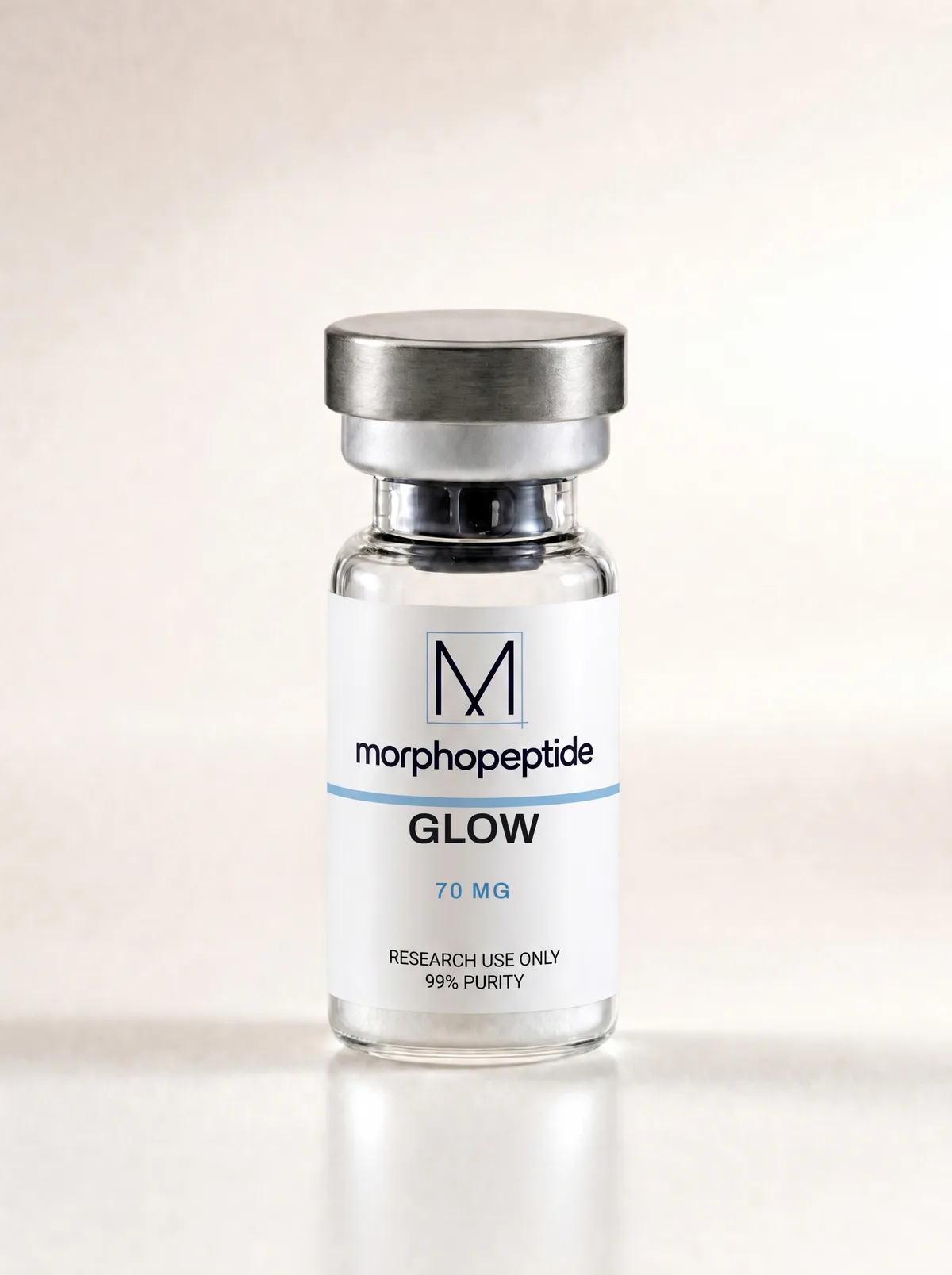
The Research Inventory is a vial-level log on Amino Axiom, a free research information platform that also hosts a compound library, a vendor directory, a glossary and keyword search. Each entry in the inventory represents one physical vial on a research bench: which compound it is, where it came from, when it arrived, and what notes the researcher attached to it. The feature lives at aminoaxiom.com/inventory.
This article compares that log with the way most laboratories actually keep track of material in anti-inflammatory pathway work: a spreadsheet, a freezer map taped to a door, and a few lines in a lab notebook. The manual method is familiar and it works up to a point. The interesting question is where it stops working, and what a structured, per-vial record changes. Everything below is framed for research purposes only, and the worked examples come from the Morphopeptide catalog.
How does a manual inventory usually look on a research bench?
Most benches converge on the same three artifacts. The first is a spreadsheet with one row per vial and columns for compound name, supplier, lot number, received date and a free-text notes field. The second is a physical map of the storage location, often a hand-drawn grid or a printed sheet that lists which rack holds which lot. The third is the lab notebook, where the vial that was actually used for a given experiment gets named in the methods section.
This setup has real strengths. It is cheap, it can be shaped around the lab's own vocabulary, and nothing about it depends on anyone else's software. A careful researcher can keep a very clean record this way.
The weakness is that the three artifacts drift apart. A vial gets relabeled and the spreadsheet is not updated. A lot number is typed with a transposed digit. The notebook says "KPV batch from August" while the spreadsheet holds two August batches. In anti-inflammatory pathway work the cost of that drift is concrete: reporter-assay and cytokine-panel results are only comparable across weeks if the material behind each run can be identified exactly.
Which identifiers belong in a vial record?
A useful vial record separates two kinds of information. The first is identity, which is a property of the compound and never changes between vials. The second is provenance, which is a property of the individual vial.
Identity should be copied from a catalog or analytical document, never typed from memory. Take GHK-Cu, a copper-binding tripeptide with CAS number 49557-75-7. The catalog lists the free tripeptide as C14H24N6O4 with a molecular weight of 340.38 g/mol, and the copper complex at roughly 403 g/mol. A record that stores only one molecular weight, without saying which form it refers to, creates a quiet problem later when two entries are compared.
KPV is simpler. It is a tripeptide (Lys-Pro-Val) with formula C16H30N4O4, a molecular weight of 342.43 g/mol and CAS number 67727-97-3. Because the identity fields are short and fixed, a researcher can verify them against a certificate of analysis in seconds.
Provenance is where the manual spreadsheet and a structured log diverge. Provenance covers supplier, lot, received date, the purity figure printed on the certificate, the analytical method named on it, and any note about the physical state of the vial on arrival. The research peptide analytical documentation standards article lists what a certificate should contain; the inventory is the place to record that you checked.
What does a vial-level log change compared with a spreadsheet?
The main change is that the vial, not the compound, becomes the unit of record. A spreadsheet row often describes "KPV" as a line item with a quantity. A vial-level log describes three separate KPV vials, each with its own lot, its own received date and its own notes.
That sounds minor until a result needs explaining. Suppose a pathway readout from one week looks different from the previous week. The first diagnostic question is whether the material changed. With a per-vial record, the answer is a lookup: same lot or different lot, same supplier or different supplier, same certificate or a different one. With a compound-level spreadsheet, the answer is often reconstructed from memory and email.
The inventory also keeps notes attached to the thing they describe. A remark such as "certificate lists HPLC purity only, no mass confirmation" belongs to one lot, and in a vial-level record it stays with that lot instead of being buried in a column that applies to the whole compound.
It is worth stating the limits plainly. The Research Inventory is a record-keeping tool. It does not verify what is in a vial, it does not replace analytical testing, and it does not interpret any result. Its value is organizational: the same facts the researcher would have written down anyway, held in a consistent structure.
How would a researcher record a compound like BPC-157?
BPC-157 is a useful case because it is a longer peptide, and long peptides raise more identity questions than tripeptides do. The catalog lists CAS number 137525-51-0, formula C62H98N16O22 and a molecular weight of 1419.56 g/mol. A researcher logging a new vial would copy those fields from the catalog entry, then add the vial-specific details from the paperwork that arrived with it.
The record might include the lot identifier, the purity figure and method from the certificate, the date received, and a short note on whether the mass listed on the certificate matches the catalog molecular weight. That last check is a common habit in analytical work: if a certificate reports a mass that does not line up with the expected value for the stated compound, the discrepancy is worth noting before the material goes into any experiment.
With a manual spreadsheet, this comparison tends to happen once, at receipt, and then lives only in the researcher's head. In a structured log the same comparison is written next to the vial and stays visible to anyone who later reads the record.
How do the two tracking methods compare task by task?
The practical difference shows up in a handful of recurring bench tasks, where a spreadsheet holds compound-level data and a vial-level log holds per-vial data. The table compares them for the compounds in this article, as of October 2026. It describes record structure only and says nothing about the material itself.
Task
By hand (spreadsheet, freezer map, notebook)
With Amino Axiom's Research Inventory
Recording a new KPV vial (CAS 67727-97-3)
One row per compound with a quantity
One entry per vial with its own lot, date and notes
Copy the identity fields (formula, molecular weight, CAS number) from the catalog entry.
Add the lot identifier exactly as printed, including prefixes.
Enter the supplier, received date and the purity figure with its analytical method.
Note whether the certificate mass matches the catalog molecular weight.
Add the date of the check so later readers know how old the verification is.
Where does manual tracking still hold up?
Manual tracking is not inferior in every respect. Three situations favor it.
A very small bench with a handful of vials does not need much structure, and a single page of notes can be enough. A lab with strict internal documentation rules may need entries in a specific format that a general tool will not match. And some researchers simply think better on paper, particularly when planning a series of experiments around which material is available.
A reasonable view is that the two methods are not rivals. The lab notebook remains the legal and scientific record of what was done. A vial-level log is a working index that makes the notebook easier to cross-check. Where both exist, a discrepancy between them is itself useful information.
What should a researcher check before trusting any inventory record?
Any log, manual or structured, is only as good as the entries in it. A short checklist helps regardless of tool.
Compare identity fields against the catalog entry or certificate rather than a previous entry, so an old typo does not propagate.
Record which form of the compound the entry refers to when more than one form exists, as with the free tripeptide and copper complex of GHK-Cu.
Keep the lot identifier exactly as printed, including any prefixes.
Note the analytical method that produced the purity figure, since different methods answer different questions.
Write down the date a check was made, so later readers know how old the verification is.
None of these steps depend on a particular platform. They are what makes any record reproducible.
How does this fit into a wider anti-inflammatory pathway workflow?
Anti-inflammatory pathway research tends to compare results across time, across compounds and across groups. Each of those comparisons depends on knowing what material produced the data. A vial-level record is a small piece of infrastructure, but it supports the larger task of making results comparable.
Researchers who want to see how the log is structured can open the Research Inventory on Amino Axiom and compare its fields with their own spreadsheet columns. Compound specifications for the examples in this article are on the Morphopeptide product pages for GHK-Cu, KPV and BPC-157.
This compound is a research chemical intended for laboratory and scientific research purposes only. Not for human use. It is not a drug, supplement, or food product, and is not intended to diagnose, treat, cure, or prevent any disease. Morphopeptide does not sell products for human consumption. Researchers are responsible for compliance with all applicable local, state, and federal regulations.
Reference
Common questions
It is a vial-level log on Amino Axiom where each entry represents one physical vial on a research bench. An entry records the compound, its source, the arrival date and researcher notes. It is a record-keeping aid for research information purposes only and does not test or verify what a vial contains.
In a vial-level log the vial, not the compound, is the unit of record, so three KPV vials appear as three entries with their own lots and dates. A compound-level spreadsheet often lists one line with a quantity. The per-vial record makes it a lookup to tell whether the material changed between runs.
Include identity fields copied from the catalog, such as formula, molecular weight and CAS number, plus provenance for the specific vial: supplier, lot, received date, purity figure and the analytical method named on the certificate. For GHK-Cu, also note whether the free tripeptide or the copper complex is meant.
No. The notebook remains the scientific record of what was done. A vial-level log works as an index that makes the notebook easier to cross-check, and a discrepancy between the two is itself useful information. A very small bench may not need extra structure at all.