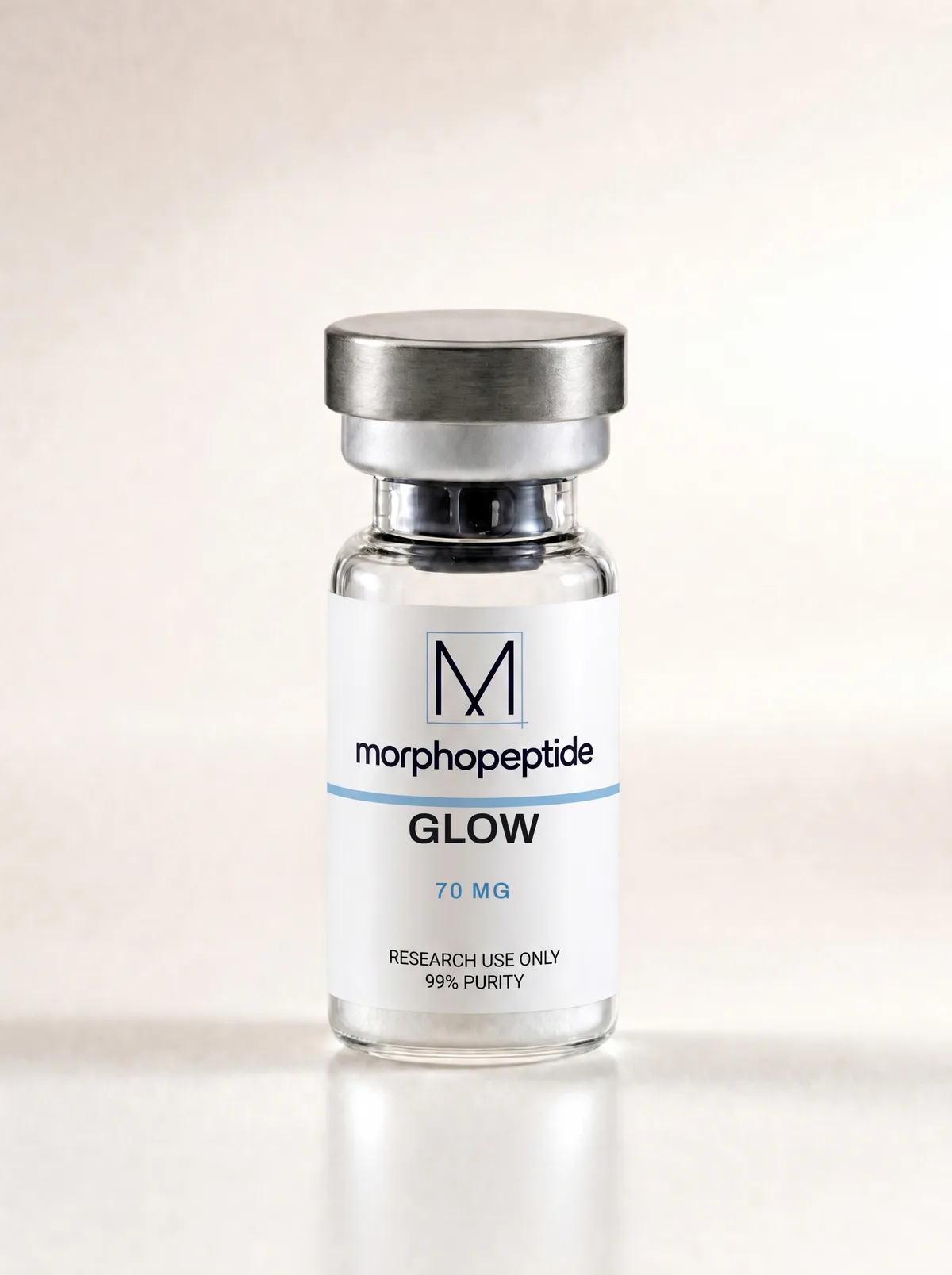
ARA-290, also referred to in the research literature as cibinetide, is a synthetic 11-amino acid peptide studied for its selective interaction with the innate repair receptor (IRR) — a heterodimeric receptor complex distinct from the erythropoietin receptor (EPOR) homodimer that mediates erythropoiesis. The compound is catalogued under CAS number 1208243-50-8 with a molecular formula of C₅₁H₈₄N₁₆O₂₁ and a molecular weight of 1257.3 g/mol. It is supplied as a lyophilized powder intended solely for research purposes and is not for human use.
ARA-290 is structurally derived from the helix B surface of erythropoietin (EPO), a 165-amino acid glycoprotein hormone that regulates red blood cell production through activation of the EPOR homodimer. The research rationale for ARA-290 as a distinct compound rests on the differentiation between two receptor systems: the EPOR homodimer, which drives hematopoietic signaling, and the EPOR/beta-common receptor (βcR) heterodimer — the innate repair receptor — which is studied in the context of tissue protection and cytoprotective signaling in preclinical research models.
What is the molecular structure of ARA-290?
ARA-290 has a molecular weight of 1257.3 g/mol and a molecular formula of C₅₁H₈₄N₁₆O₂₁. As an 11-amino acid synthetic peptide, it sits in the lower-middle range of the molecular weight distribution for research peptides — substantially larger than short tripeptides or dipeptides, but an order of magnitude smaller than many glycopeptide hormones or lipidated long-acting analogs.
The compound is produced through solid-phase peptide synthesis followed by HPLC purification, and research-grade material is characterized to a purity specification of 99%+ by HPLC. The lyophilized form is a white to off-white powder. ARA-290 does not carry a lipid moiety or PEGylation, and its stability profile in lyophilized form is consistent with standard short-to-mid-length synthetic peptides: sensitive to oxidation, hydrolysis, and humidity, with cold storage at −20°C as the documented preservation condition.
The molecular weight of 1257.3 g/mol is consistent with an 11-amino acid peptide of the composition described in the research literature for the helix B surface region of EPO used as the design basis for ARA-290. Mass spectrometry identity confirmation against this theoretical mass is a component of the analytical documentation for each production batch.
What is the relationship between ARA-290 and erythropoietin?
Erythropoietin (EPO) is a 165-amino acid glycoprotein primarily produced in the kidneys in response to hypoxic conditions. Its classical function — the regulation of erythropoiesis through activation of the EPOR homodimer on erythroid progenitor cells in bone marrow — is well characterized in the hematology literature. However, EPO receptors are expressed beyond hematopoietic tissue, and a separate receptor system — the EPOR/βcR heterodimer — has been studied as a distinct signaling entity in non-hematopoietic cell types.
ARA-290 is structurally derived from the helix B surface of EPO, a region of the protein that is examined in the research literature for interactions with the EPOR/βcR heterodimer. The design principle for ARA-290 as a research tool is to isolate this receptor interaction from the hematopoietic signaling associated with full-length EPO activating the EPOR homodimer. By limiting the structure to the helix B surface sequence, ARA-290 is studied as a compound that can probe the IRR pathway in isolation from the hematopoietic effects of the full EPO molecule.
This parent-fragment relationship is fundamental to how ARA-290 is used in research contexts. Experiments using ARA-290 are not studying erythropoiesis or hematopoietic cell responses — they are studying the separate signaling system associated with the EPOR/βcR heterodimer and its downstream pathway activity in non-hematopoietic cell and tissue models.
What is the innate repair receptor, and how does ARA-290 interact with it?
The innate repair receptor (IRR) is a heterodimeric receptor complex composed of the erythropoietin receptor (EPOR) and the beta-common receptor (βcR, also known as CD131). The βcR subunit is a signal-transducing component shared with receptors for interleukin-3, interleukin-5, and granulocyte-macrophage colony-stimulating factor (GM-CSF). In the context of the IRR, the EPOR/βcR heterodimer is studied as a tissue-protection signaling system expressed in a range of non-hematopoietic cell types including neurons, astrocytes, cardiac myocytes, and endothelial cells.
The distinction between the EPOR homodimer and the EPOR/βcR heterodimer is a central concept in ARA-290 research. Full-length EPO activates both receptor systems, making it difficult to separate hematopoietic signaling from tissue-protection signaling in experimental designs using the native hormone. ARA-290 is studied as a compound with selectivity for the IRR — specifically, it is characterized in published research as interacting with the EPOR/βcR heterodimer without activating the EPOR homodimer at concentrations used in research model systems.
Downstream signaling pathways associated with IRR activation in published research include JAK2/STAT5 signaling through the βcR component, as well as PI3K and MAPK pathway engagement, in the cell types where the IRR is expressed. These downstream signals are the mechanistic variables measured in ARA-290 research experiments — the compound is used as a research tool to probe these pathway responses in the context of specific cell models, not as a clinical intervention.
How does ARA-290 receptor selectivity differ from full erythropoietin?
The receptor selectivity profile of ARA-290 relative to full EPO is the defining pharmacological distinction that motivates its use as a research tool. The comparison can be structured across the two receptor systems:
Parameter
Full erythropoietin (EPO)
ARA-290
Structure
165-amino acid glycoprotein, MW ~30,400 Da
11-amino acid synthetic peptide, MW 1257.3 g/mol
EPOR homodimer activation
Yes — drives erythropoiesis
Not detected at research concentrations
EPOR/βcR heterodimer (IRR) interaction
Yes — alongside EPOR homodimer
Primary characterized interaction
Hematopoietic signaling
Present
Not associated in research models
Research utility
Broad EPO biology; hematopoiesis studies
IRR-selective signaling pathway studies
This selectivity profile makes ARA-290 useful for research designs that require activation of IRR-associated signaling without the hematopoietic effects and the methodological complexity of using full-length EPO. In cell culture models examining neuroprotective signaling, endothelial signaling, or tissue-protection pathway responses, the ability to selectively probe the IRR in isolation from EPOR homodimer-mediated hematopoiesis is the primary scientific rationale for ARA-290 as a distinct research compound.
What research model contexts is ARA-290 studied in?
ARA-290 appears in the published research literature across several distinct experimental contexts, each tied to the distribution of IRR expression in non-hematopoietic tissue:
Neuroprotective signaling research models. The IRR is expressed in neuronal and glial cell populations, and ARA-290 is studied in models examining cytoprotective signaling pathway responses in central and peripheral nervous system cell types. Downstream signaling measurements — including JAK2/STAT5 pathway activation, survival signaling markers, and apoptosis pathway parameters — are the typical outcome variables in these cell-based and preclinical models.
Small fiber neuropathy research models. A specific body of research has examined ARA-290 in the context of small fiber neuropathy, particularly in models associated with sarcoidosis and diabetic peripheral neuropathy research systems. The mechanistic variable studied is IRR-mediated signaling in small-diameter sensory nerve fiber populations. These are mechanistic studies examining signaling pathway responses in specific nerve fiber cell models; they are not framed as clinical treatment protocols.
Endothelial and vascular signaling research. IRR expression in endothelial cells makes ARA-290 a relevant research compound in studies examining vascular signaling pathway responses. Endothelial cell survival signaling, migration responses, and tube formation parameters in matrigel assays have been studied as outcome variables in this context.
Metabolic and pancreatic research models. The IRR is expressed in pancreatic islet cells, and ARA-290 has been studied in models examining islet cell signaling and survival pathway parameters in the context of pancreatic biology research.
In each of these contexts, ARA-290 functions as a pharmacological probe: a compound whose defined receptor selectivity allows researchers to examine the specific contribution of IRR signaling to the cellular responses under study. Morphopeptide does not make therapeutic or outcome claims regarding ARA-290; it is studied solely for its receptor interaction and downstream signaling pathway effects in research model systems.
How does Morphopeptide supply and document ARA-290?
Morphopeptide supplies ARA-290 as a research-grade compound held to a purity specification of 99%+ by HPLC, with mass spectrometry identity confirmation against the theoretical molecular weight of 1257.3 g/mol. The compound is documented with a batch-specific Certificate of Analysis covering HPLC chromatographic data and MS identity confirmation.
Storage conditions for the lyophilized material are −20°C. ARA-290 should be protected from moisture, oxidation, and repeated freeze-thaw cycles during research handling. The absence of lipidation or PEGylation means the compound does not benefit from the extended solution stability associated with structurally modified peptides; lyophilized storage at cold temperature is the appropriate preservation condition for maintaining specification between experiments. This article does not provide preparation or reconstitution guidance; handling protocols are determined by the researcher according to experimental requirements and applicable regulations.
Researchers can review the molecular specification, available sizes, and pricing on the ARA-290 product page. The full research compound catalog is available at all compounds. For background on interpreting the analytical documentation provided for each order, see the COA and analytical standards reference. All material is intended for laboratory research use only.
This compound is a research chemical intended for laboratory and scientific research purposes only. Not for human use. It is not a drug, supplement, or food product, and is not intended to diagnose, treat, cure, or prevent any disease. Morphopeptide does not sell products for human consumption. Researchers are responsible for compliance with all applicable local, state, and federal regulations.