What is BPC-157, and why is it examined in receptor binding studies?
BPC-157 is a synthetic pentadecapeptide catalogued under CAS number 137525-51-0, with molecular formula C62H98N16O22 and a molecular weight of 1419.56 g/mol. It is supplied as a lyophilized powder for laboratory research applications and is not for human use. The name refers to "Body Protection Compound," reflecting the gastric-juice protein fragment from which the sequence was originally derived, although the research material is a defined synthetic chemical entity.
Receptor binding studies ask a narrow, quantitative question: does a ligand physically associate with a candidate receptor, how tightly, and how specifically? For BPC-157 this question is open in a way that makes it methodologically interesting. Much of the published literature describes downstream signaling and tissue-level observations, while the identity of a primary receptor has been a recurring point of discussion. Binding assays are the tool that separates a direct receptor interaction from an indirect pathway effect, which is why they matter for anyone trying to place the compound within anti-inflammatory pathway research.
This article covers the structural properties relevant to binding experiments, the assay formats used to measure ligand-receptor association, the candidate pathways that binding work has been designed to probe, and the limits on what binding data can establish. All content is provided for research purposes only.
Which structural properties of BPC-157 matter for binding assay design?
Binding experiments are sensitive to ligand integrity in a way that many functional assays are not. A functional readout can tolerate some degradation if the remaining intact material still produces a signal. A binding measurement reports an apparent affinity that depends directly on how much of the labeled or unlabeled ligand is the intended molecule, so impurities and breakdown products distort the result.
At 15 residues and 1419.56 g/mol, BPC-157 is large enough to contain several sites susceptible to proteolysis in biological buffers, yet small enough that its conformational freedom is substantial in solution. A linear peptide of this size typically samples many conformations, and the bound conformation may be only a small fraction of the ensemble. That has two consequences for experimental design. First, assay buffers and incubation times need to be chosen with peptide stability in mind, and integrity should be verified by chromatography and mass spectrometry across the incubation window. Second, binding constants measured for flexible peptides often reflect an induced-fit process, so apparent affinity can shift with temperature, ionic strength and buffer composition.
The catalog specification lists a minimum purity of 99%+ by HPLC, with storage at -20 °C as a lyophilized powder. For binding work, purity documentation is not a formality: a few percent of truncated sequences with partial affinity can produce a binding curve that looks shallower or more complex than the true interaction.
What assay formats are used to measure ligand-receptor binding?
Four formats appear most often in peptide binding research, and each answers a slightly different question.
Radioligand binding assays use a labeled ligand and membrane preparations or whole cells expressing a candidate receptor. Saturation experiments yield an equilibrium dissociation constant and receptor density, while competition experiments measure how an unlabeled compound displaces a reference ligand. Their strength is sensitivity and long precedent. Their limits are the need to label the peptide without altering its binding, and the safety and regulatory overhead of radiochemistry.
Surface plasmon resonance measures binding in real time by immobilizing a receptor fragment or purified protein on a sensor surface and flowing the ligand across it. It reports association and dissociation rates in addition to equilibrium affinity, which is valuable for distinguishing a fast-on, fast-off interaction from a slow-off one that shares the same equilibrium constant. Immobilization can change how the receptor presents, and a purified extracellular domain may not represent the full membrane protein.
Fluorescence polarization and related fluorescence-based formats use a fluorescently tagged ligand and measure the change in rotational mobility on binding. They are well suited to higher-throughput screening, although the fluorophore is a sizeable modification for a 15-residue peptide and needs a control for tag-driven artifacts.
Isothermal titration calorimetry measures the heat of binding directly in solution without labels or immobilization, and yields stoichiometry and thermodynamic parameters in a single experiment. It requires relatively large quantities of well-characterized material, which again makes purity documentation central.
Which candidate receptors and pathways have binding work been designed to probe?
Published work places BPC-157 in the context of several signaling systems, and binding experiments are used to test which of these represent direct interactions. Growth factor receptor signaling, particularly vascular endothelial growth factor receptor 2 expression and downstream phosphorylation, is one frequently cited area. Nitric oxide signaling is another, along with focal adhesion kinase and paxillin signaling in migration models. Inflammatory mediator pathways, including NF-kB signaling and cytokine production, connect the compound to the anti-inflammatory research lane.
The key point for binding research is that these are pathway-level observations. A change in receptor expression or phosphorylation after exposure to the compound does not show that the compound binds that receptor. It shows that something upstream was altered, and the upstream event could be direct binding, a secondary messenger effect, or a change in ligand availability. Binding assays are how researchers separate these possibilities, and a well-designed program pairs a binding measurement with a functional readout in the same cell system.
Comparison compounds help here. Receptor-focused peptides with defined targets, such as ARA-290 and its innate repair receptor, give researchers a reference for what a characterized peptide-receptor binding profile looks like, and a way to check that a given assay format works in their hands. KPV, whose melanocortin-related signaling has been examined in separate work, serves a similar role as a short-sequence comparator.
How should binding data for a flexible peptide be interpreted?
Several interpretive cautions apply to any peptide binding dataset, and they apply with particular force to a flexible linear sequence.
An apparent dissociation constant is only meaningful when the assay is at equilibrium, the ligand concentration is accurately known, and depletion effects are controlled. Peptides stick to plastic and glass, so the free concentration in a low-volume well can be well below the nominal one, which shifts the apparent affinity toward weaker values. Using low-binding consumables and measuring concentration after incubation are standard controls.
Specificity requires a counter-screen. A single positive binding result against one candidate receptor is not evidence of selectivity until the same ligand has been tested against related receptors and against a receptor-null background. Non-specific binding is subtracted in competition formats, but the subtraction depends on a validated displacer.
Cell-based and membrane-based binding can disagree. Receptor conformation, co-receptors and lipid environment differ between a purified fragment, a membrane preparation and an intact cell, and an interaction seen in one format may not appear in another. Published studies are most informative when they report results from more than one format.
Finally, binding is not function. High affinity does not imply a particular downstream effect, and a functional effect can occur without measurable high-affinity binding. Binding data is best read as one part of a mechanistic argument, alongside pathway readouts and structure-based analysis.
What are the main open questions in BPC-157 receptor research?
The most visible open question is the identity and number of direct binding partners. Because the published signaling observations span growth factor, nitric oxide and cytoskeletal pathways, researchers have raised the possibility of a single upstream interaction as well as of multiple independent ones. Systematic binding screens against receptor panels, combined with orthogonal formats, are the type of design that can distinguish these cases.
A second open question concerns structure. Without a solved structure of the peptide bound to a receptor, the bound conformation remains inferred. Nuclear magnetic resonance studies of the free peptide in solution, and computational docking against candidate receptor models, are being used to narrow the options, although docking results for flexible peptides need experimental confirmation.
A third concerns reproducibility. Binding results depend on peptide batch, handling and assay conditions, and cross-laboratory comparison is only possible when each report states the compound's purity, the verification method and the buffer system used. This is why analytical documentation travels with each research batch.
How does Morphopeptide document BPC-157 for binding research?
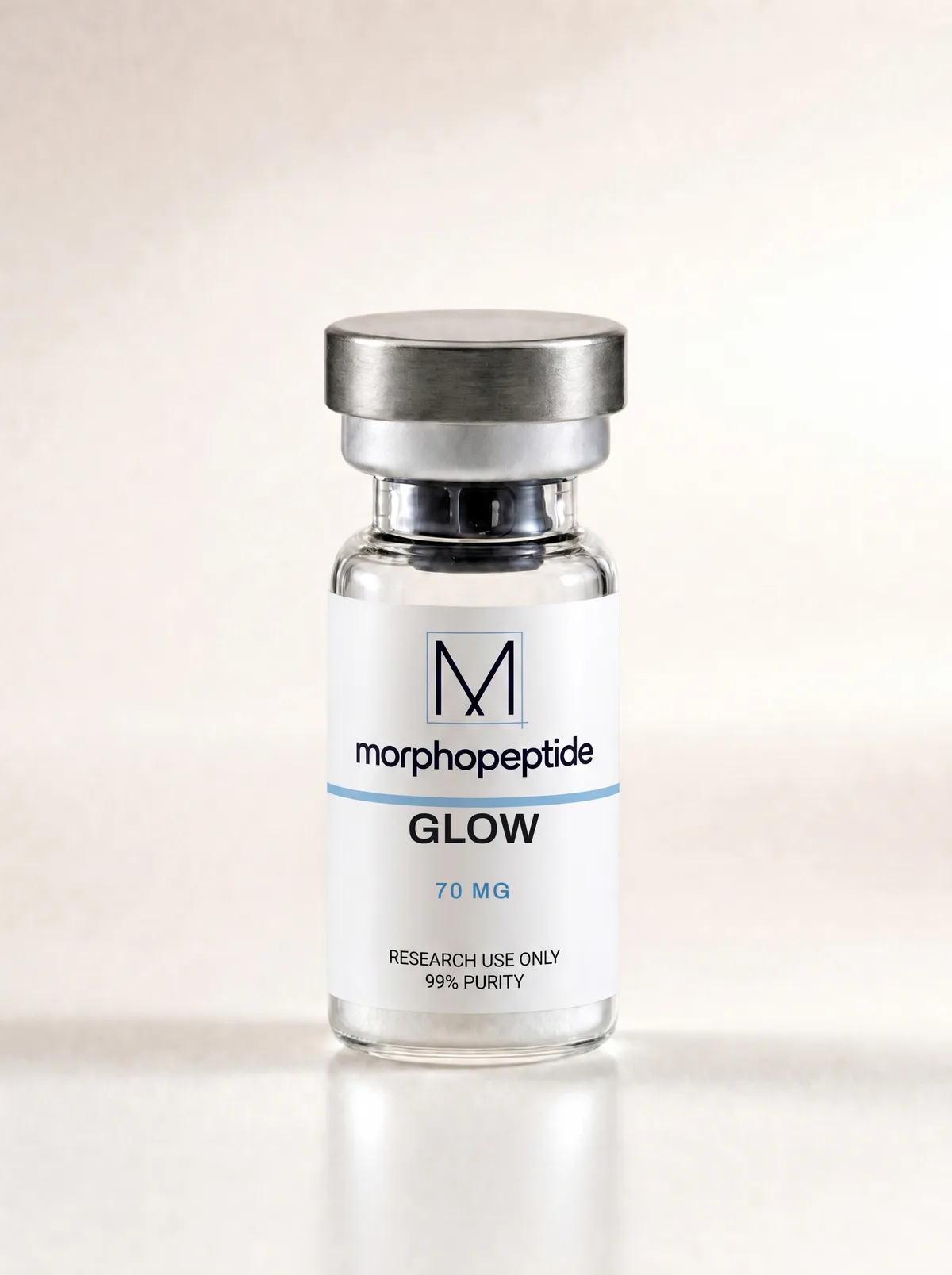
Morphopeptide supplies BPC-157 as a research-grade compound with HPLC purity of 99%+ and mass spectrometry identity confirmation against the theoretical molecular weight of 1419.56 g/mol, documented in a Certificate of Analysis for each batch. Lyophilized material is stored at -20 °C, protected from moisture and light. This article does not provide preparation instructions; handling protocols are determined by the researcher according to experimental requirements and applicable institutional regulations.
This compound is a research chemical intended for laboratory and scientific research purposes only. Not for human use. It is not a drug, supplement, or food product, and is not intended to diagnose, treat, cure, or prevent any disease. Morphopeptide does not sell products for human consumption. Researchers are responsible for compliance with all applicable local, state, and federal regulations.