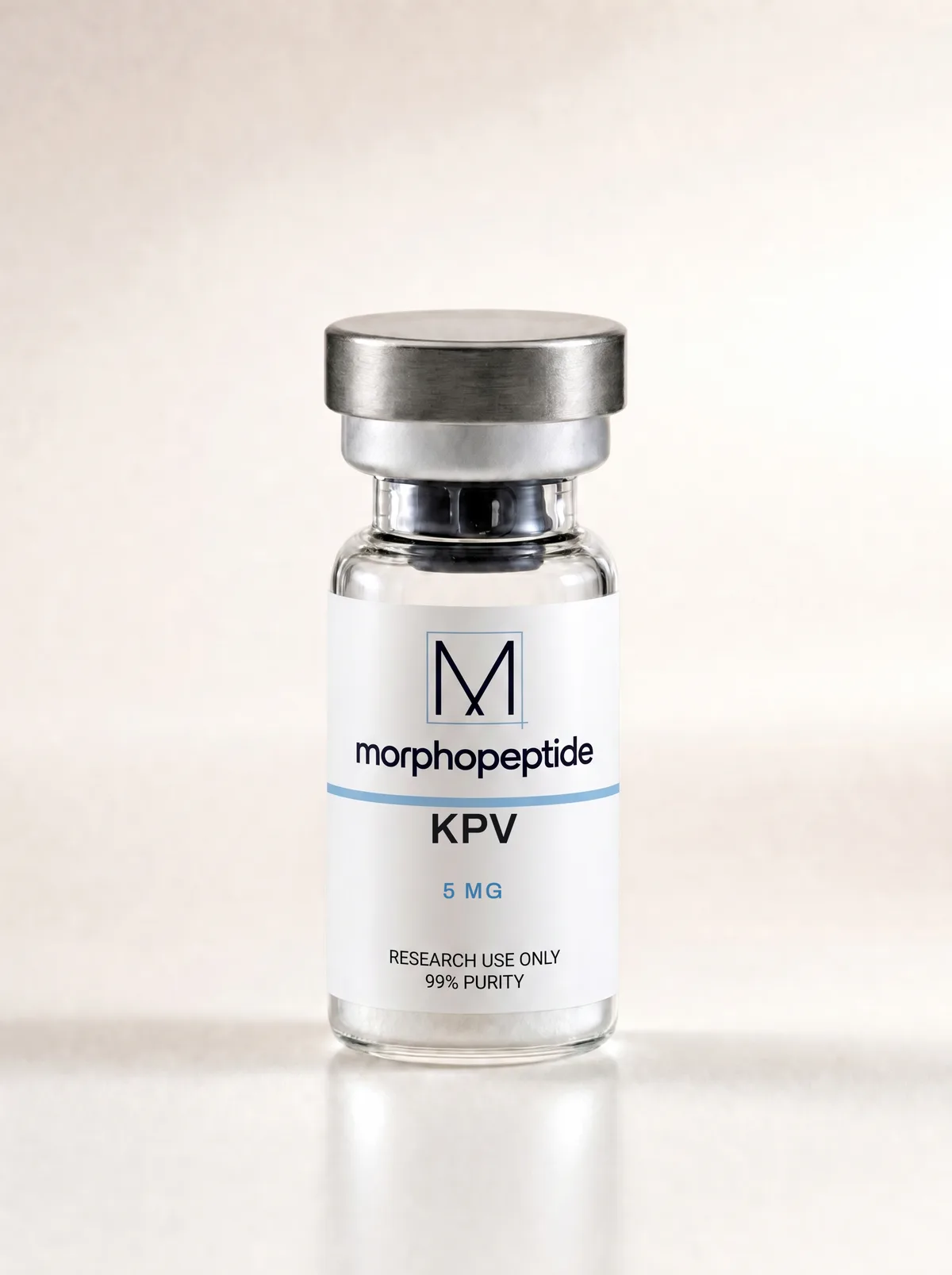
KPV is a synthetic tripeptide studied in research for its activity at melanocortin receptors and its interactions with NF-κB signaling cascades in cell-based and preclinical research models. Its common name derives from the one-letter amino acid codes for its constituent sequence: lysine (K), proline (P), and valine (V). The compound is catalogued under CAS number 67727-97-3 with a molecular formula of C₁₆H₃₀N₄O₄ and a molecular weight of 342.43 g/mol. It is supplied as a lyophilized powder intended solely for research purposes and is not for human use.
KPV corresponds to the C-terminal tripeptide sequence of alpha-melanocyte stimulating hormone (α-MSH), a 13-amino acid neuropeptide derived from proopiomelanocortin (POMC). In research, KPV is examined as a structurally minimal fragment that retains certain receptor interaction properties of the parent peptide. Its low molecular weight relative to most research peptides reflects the tripeptide structure — three amino acids linked by two peptide bonds — and places it at the smallest end of the synthetic peptide research category.
What is the molecular structure of KPV?
KPV has a molecular weight of 342.43 g/mol and a molecular formula of C₁₆H₃₀N₄O₄. As a tripeptide, it consists of three amino acid residues — lysine, proline, and valine — connected sequentially by peptide bonds. The sequence positions lysine at the N-terminus, proline in the central position, and valine at the C-terminus.
The molecular weight is atypically low for a research peptide with documented receptor activity. Most synthetic peptides studied for receptor interactions range from approximately 700 Da to several thousand daltons. KPV's 342.43 g/mol reflects its tripeptide length, which also makes its HPLC chromatographic profile and mass spectrometry behavior distinct from larger peptide compounds — the compound ionizes cleanly by ESI-MS and its small size provides clear mass spectrometric identity confirmation.
The compound is produced through solid-phase peptide synthesis followed by HPLC purification, and research-grade material is characterized to a purity specification of 99%+ by HPLC. The lyophilized form is a white to off-white powder. As a short peptide without lipidation or other structural modifications for extended stability, KPV is sensitive to hydrolysis, oxidation, and humidity, which makes appropriate storage conditions relevant for maintaining material integrity between experiments.
What is the relationship between KPV and alpha-melanocyte stimulating hormone?
Alpha-melanocyte stimulating hormone (α-MSH) is a 13-amino acid neuropeptide derived from proopiomelanocortin (POMC) through enzymatic processing. It is an endogenous ligand for the melanocortin receptor family — a group of five G-protein-coupled receptors (MC1R through MC5R) — and is studied for its involvement in pigmentation, energy regulation, and immune-related signaling pathways in preclinical and cell biology research.
KPV represents the C-terminal tripeptide of α-MSH, corresponding to amino acid positions 11 through 13 of the parent peptide sequence. Research into peptide fragments of α-MSH has examined which subregions of the parent sequence retain the ability to interact with melanocortin receptors and to modulate the downstream signaling pathways associated with full-length α-MSH. KPV is the minimal fragment within this research context that has been studied for receptor engagement and NF-κB pathway interactions.
The distinction between KPV and α-MSH matters for research interpretation. Full-length α-MSH engages the complete pharmacological profile of the melanocortin receptor family and carries additional structural determinants not present in the tripeptide. KPV's receptor interaction profile is studied as a distinct pharmacological entity — not as a substitute for the parent peptide — and research results from experiments using KPV are not directly extrapolated to the behavior of full-length α-MSH or other melanocortin-active peptides.
What receptors does KPV interact with in research models?
Published research characterizes KPV's receptor interactions in the context of the melanocortin receptor family, specifically MC1R and MC3R. Both are class A G-protein-coupled receptors. MC1R is expressed in a variety of cell types and is studied extensively in the context of pigmentation biology, immune cell signaling, and cytokine pathway modulation. MC3R is expressed in the central nervous system and peripheral tissues and is studied in the context of energy homeostasis signaling and immune regulation research models.
The mechanistic framing in the research literature places KPV's receptor interactions in the context of cAMP-mediated signaling downstream of MC1R and MC3R activation. Engagement of these receptors by α-MSH and its fragments is associated in published research with downstream effects on NF-κB pathway activation — specifically, modulation of the nuclear factor kappa-light-chain-enhancer of activated B cells (NF-κB) transcription factor system, which is a central regulator of cytokine signaling cascades in cell biology.
Morphopeptide does not make therapeutic or outcome claims regarding KPV. The compound is studied solely for its effects on melanocortin receptor engagement and downstream signaling pathways in research model systems, not for clinical application.
What downstream signaling pathways does research associate with KPV?
The primary downstream signaling pathway studied in association with KPV and related α-MSH fragments is the NF-κB pathway. NF-κB is a transcription factor complex that regulates the expression of genes involved in cytokine production, immune cell activation, and cellular stress responses. In baseline cellular conditions, NF-κB is held inactive in the cytoplasm through association with inhibitory proteins. Activation — triggered by a variety of upstream signals — leads to NF-κB nuclear translocation and transcriptional activity.
Research on α-MSH and its fragments has examined the pathway interactions between melanocortin receptor activation and NF-κB pathway activity in cell-based models. Studies using intestinal epithelial cell lines and immune cell models have characterized the relationship between MC1R or MC3R engagement and downstream effects on NF-κB signaling components and cytokine gene expression patterns. KPV is studied in this context as the minimal tripeptide fragment that retains the capacity to interact with this signaling axis in preclinical model systems.
The research framing for KPV is consistently mechanistic: studies examine receptor binding parameters, downstream signaling measurements (IκB degradation, NF-κB nuclear translocation, cytokine mRNA or protein levels in cell culture), and concentration-response relationships in controlled research conditions. The literature does not frame these observations as therapeutic outcomes; it characterizes the pharmacological mechanism at the signaling pathway level.
Why is KPV studied in intestinal and mucosal research models?
A recurring experimental context for KPV in published research is intestinal epithelial and mucosal signaling. MC1R is expressed in intestinal epithelial cells, and NF-κB pathway activity in these cell types is a studied variable in intestinal biology research. The intersection of melanocortin receptor expression in the intestinal epithelium and the NF-κB signaling pathway's role in cytokine regulation makes intestinal cell models a natural experimental context for characterizing KPV's receptor and signaling interactions.
Research in this area uses cell lines derived from intestinal epithelial tissue (such as Caco-2 and HT-29 cells) and, in some studies, ex vivo intestinal tissue preparations or rodent models with intestinal pathology as experimental systems. The outcome variables measured typically include NF-κB activation markers, cytokine protein secretion profiles, and barrier function parameters — all at the mechanistic level of signaling pathway characterization rather than clinical outcome assessment.
KPV's tripeptide structure is also relevant to its utility in intestinal research models: the small molecular size raises questions about stability in the proteolytic environment of the gastrointestinal tract, and studies have examined peptide stability in this context as part of characterizing KPV's suitability for specific experimental models. This is distinct from any clinical or therapeutic framing; it is a pharmacological characterization relevant to designing valid research models.
How does Morphopeptide supply and document KPV?
Morphopeptide supplies KPV as a research-grade compound held to a purity specification of 99%+ by HPLC, with mass spectrometry identity confirmation. The compound is documented with a batch-specific Certificate of Analysis covering both the chromatographic purity data and the mass spectrometric identity result.
Storage conditions for the lyophilized material are −20°C. As a short peptide without a lipid moiety or other stabilization modification, KPV is more susceptible to hydrolysis and oxidation than larger, structurally modified peptides. Research handling practices that preserve specification integrity include maintaining cold storage, limiting exposure to moisture and repeated freeze-thaw cycles, and working with the lyophilized material under conditions that minimize humidity exposure. This article does not provide preparation instructions; handling protocols are determined by the researcher according to experimental requirements and applicable regulations.
Researchers can review the molecular specification, available sizes, and pricing on the KPV product page, or browse the full research compound catalog at all compounds. For a reference on interpreting COA documentation provided for each order, see the analytical documentation standards article. All material is intended for laboratory research use only.
This compound is a research chemical intended for laboratory and scientific research purposes only. Not for human use. It is not a drug, supplement, or food product, and is not intended to diagnose, treat, cure, or prevent any disease. Morphopeptide does not sell products for human consumption. Researchers are responsible for compliance with all applicable local, state, and federal regulations.